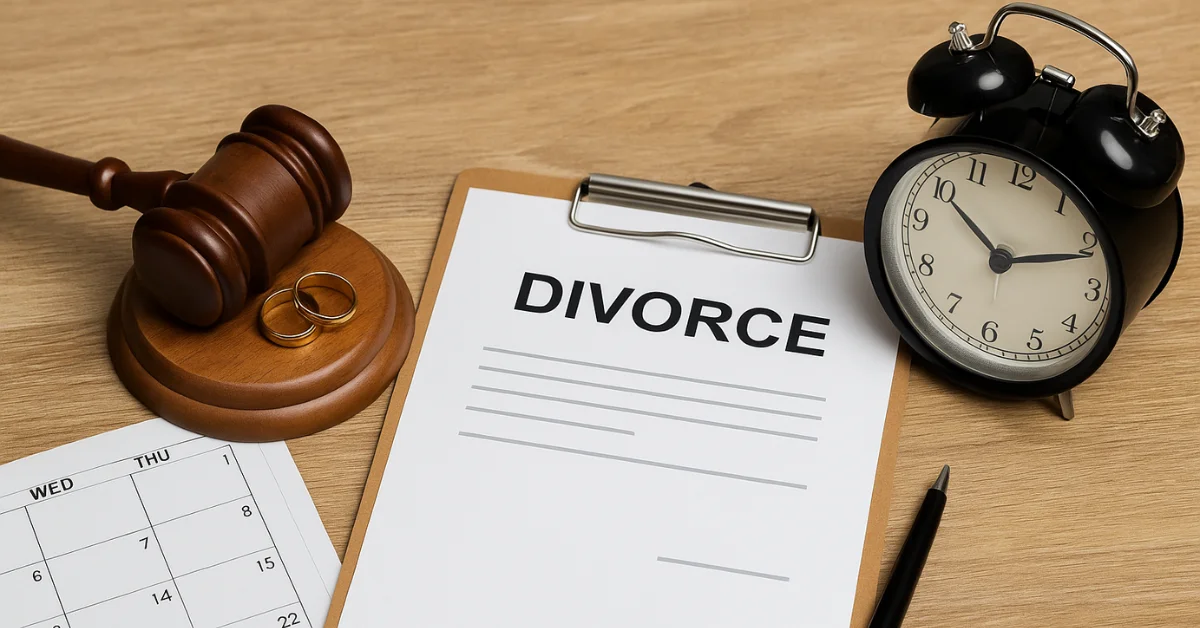
A divorce in California can take anywhere from the state required minimum of six months to well over a year. It depends on how complex the case is and how quickly each step is completed. Many people expect a straightforward timeline, but the process varies based on agreements, required documents, court availability, and how cooperative each spouse is throughout the case. Understanding the stages of a California divorce and the factors that influence timing helps set realistic expectations and prepares you for what to expect from start to finish.
Overview of the Divorce Process in California
The divorce process in California begins with filing the correct documents, serving your spouse, and exchanging required financial information. These early steps set the foundation for the entire case and determine how smoothly the timeline will move forward.
Required Steps Before the Timeline Begins
Preparing divorce paperwork: Before the timeline can officially begin, the filing spouse must complete the required divorce forms. These include basic information about the marriage, requests regarding property and custody, and any temporary orders being sought. Preparing these documents carefully is important because errors at this stage can cause delays once the case reaches the court.
Mandatory financial disclosures: Both spouses must exchange financial disclosures that list income, expenses, assets, and debts. These disclosures are essential because they help determine fair agreements for property division, support, and other financial matters. If either spouse postpones or submits incomplete disclosures, the divorce process can slow down significantly.
Serving the divorce petition on your spouse: Once the forms are completed and filed with the court, the petition must be served on the other spouse. The divorce timeline does not begin until service is properly completed. This means delays in serving the petition can postpone the entire case. After service, the responding spouse has a set period to reply, which also affects how long the process takes.
What Forms Are Needed for a Divorce Petition
Overview of forms used in a California divorce: A typical California divorce petition includes forms such as the Petition for Dissolution, Summons, and various case information sheets. Additional forms may be required depending on whether the couple has children or is requesting temporary orders. These documents provide the court with the basic structure of the case and outline what each spouse is requesting.
How incomplete forms can delay the timeline: If any required information is missing or filled out incorrectly, the court may reject or delay processing the documents. This can push the case back by weeks or months. Ensuring all forms are accurate and complete helps the case move forward without unnecessary setbacks and allows the official timeline to begin as early as possible.
How Do I File for Divorce in California?
Filing for divorce in California involves submitting the required forms to the court, serving your spouse, and completing the early steps that allow the case to officially begin. How quickly these tasks are completed will influence when the divorce timeline starts.
Filing the petition: You begin the case by filing the divorce petition and supporting documents with the county court where you meet residency requirements.
Service of process: After filing, the petition must be formally served on your spouse so they are notified of the case. The court cannot move forward until service is completed.
How long filing and service usually take: Filing can be completed the same day, while service may take several days or sometimes longer, depending on cooperation and the method used to deliver the documents.
Common delays in the early stages: Delays often happen when forms are incomplete, the spouse cannot be reached for service, or required disclosures are not prepared on time. Any of these issues can push the start of the timeline further out.
What Happens After Filing for Divorce
Once the petition is filed and served, the divorce process moves into the stage where the court timeline officially begins. This period involves mandatory waiting times, financial disclosures, and attempts to resolve issues through negotiation or mediation.
Start of the Six Month Waiting Period
California uses a six month waiting period to allow both spouses enough time to exchange information, resolve disputes, and make informed decisions before the court ends the marriage.
The waiting period starts only after the petition is served on the other spouse, not on the day the forms are filed with the court.
Six months is the shortest possible time a divorce can be finalized, but many cases take longer due to disagreements, incomplete documents, or court processing delays.
Negotiation, Mediation, or Default
Mediation can take a few sessions or several months depending on how many issues need to be resolved and how quickly both spouses can reach an agreement.
Alternative dispute resolution, such as mediation or collaborative discussions, often shortens the divorce timeline by avoiding lengthy court hearings and helping spouses reach settlements sooner.
If one spouse does not respond to the divorce petition, the filing spouse may request a default judgment. This can speed up the case in some situations, but it still requires proper disclosures and court review.
Uncontested vs Contested Divorce Timelines
The overall length of a California divorce depends heavily on whether both spouses agree on the major issues or if there are disputes that require court involvement. Uncontested cases usually move quickly, while contested cases take more time due to hearings, evaluations, and extended negotiations.
How Long an Uncontested Divorce Takes in California
An uncontested divorce usually takes around six to eight months from the date of service, since both spouses agree on all major issues and there are fewer steps for the court to review.
When spouses reach a full agreement early in the case, the required paperwork can be submitted sooner. This allows the court to review the judgment while the waiting period runs, which speeds up the overall timeline.
Uncontested cases have no active disputes, so there are no additional hearings or negotiations. As long as disclosures are completed and forms are accurate, these cases often finalize shortly after the six month waiting period ends.
How Long a Contested Divorce Takes in California
Contested divorces take longer because spouses must resolve disputes through negotiation, mediation, or court hearings. Each unresolved issue adds time to the process.
Cases involving disagreements about parenting plans, support, or complex property division tend to move more slowly. These matters often require evaluations, financial analysis, or multiple rounds of negotiation.
Contested cases rely on court schedules, and hearing dates may be months apart due to high case volume. These gaps significantly extend the overall timeline, causing many contested divorces to last a year or longer.
What Happens When One Spouse Does Not Agree
When one spouse does not agree to the terms of the divorce, the case becomes contested. Contested divorces usually take longer because the spouses must resolve disagreements through negotiation, mediation, or court hearings. These additional steps often extend the timeline to a year or more, depending on the complexity of the issues.
If a spouse delays paperwork, avoids communication, or refuses to participate in mediation, the process slows down. The court may require extra hearings or additional notices to ensure both spouses have opportunities to respond. These delays can extend the case well beyond the minimum waiting period.
If the responding spouse completely fails to participate or does not file a response within the required time, the filing spouse can request a default judgment. This option can speed up some parts of the process, but it still requires proper financial disclosures and court review. A default judgment often takes several months to finalize.
When a spouse is uncooperative or unreachable, the court may require proof of diligent service attempts, additional declarations, or hearings to confirm that proper notice was given. These extra steps add time and can significantly extend the overall divorce timeline.
How Long Does a Divorce Take if Both Parties Agree
When both spouses agree on all issues, the divorce can move quickly because there are no disputes to resolve. In these cases, the fastest possible timeline is slightly longer than the six month waiting period required by California law.
If all disclosures, settlement documents, and judgment forms are completed early, the court can review the paperwork while the waiting period runs. This means the divorce can be finalized soon after the six months end. As long as there are no errors or missing information.
Early agreements reduce the need for hearings, mediation, or additional filings. When everything is submitted correctly and on time, the court only needs to confirm that the terms are fair and that all legal requirements are met. This leads to faster review and a quicker final judgment.
Timeline for Default in a California Divorce
A default applies when the responding spouse does not file a formal response within the allowed time after being served. This usually happens when the spouse chooses not to participate or does not contest any of the terms requested in the petition. Once the deadline passes, the filing spouse can move forward without the other party’s involvement.
A default judgment is not automatic. After the waiting period and all required forms are submitted, the court reviews the documents to ensure everything is legally accurate. This review process can take several weeks or sometimes a few months depending on court workload.
Even in a default case, the filing spouse must complete financial disclosures and submit a full judgment packet. The court requires this information to confirm that the requests in the petition are fair and properly supported. Missing or incomplete paperwork can delay the default judgment and extend the overall timeline.
How Do I Finalize a Divorce in California?
To finalize a divorce in California Orange County, the spouses must submit all judgment documents to the court. These forms explain how property will be divided, how support will be handled, and how parenting arrangements will work if children are involved. Once everything is submitted, the court reviews the documents to make sure they are complete and legally accurate. Processing times vary across counties and may take anywhere from a few weeks to a few months, depending on court workload.
After the review, the judge signs the final orders that officially end the marriage. This step can take additional time if the court has a backlog or if the judge needs clarification on any part of the agreement. Delays at this stage often happen because a form is incomplete, signatures are missing, or the information in the judgment packet does not match earlier disclosures. Any errors must be corrected before the court can finalize the divorce.
How to Speed Up a Divorce in California
A divorce can move faster when paperwork is accurate and complete. Since mistakes often cause the most significant delays. Completing financial disclosures early also helps because it allows discussions about settlement to begin right away. Many couples choose mediation to reach agreements more quickly, since it avoids the long wait times associated with court hearings.
Clear communication between spouses reduces misunderstandings and prevents unnecessary back-and-forth that slows progress. Working with a legal professional can also speed up the process, since they can ensure forms are filled out correctly and that each step is completed on time. Together, these efforts help shorten the overall divorce timeline and make the process more efficient.
Estimated Timelines for Different Divorce Scenarios
The length of a divorce in California depends on the level of agreement between spouses, the complexity of financial or parenting issues, and how much court involvement is required. Below are the typical timelines for the most common divorce situations in the state.
Minimum six month timeline
- Applies to every divorce in California
- Starts on the date the petition is served
- Cannot be shortened by agreement or court order
- Paperwork can be completed earlier, but the marriage cannot legally end before six months
Uncontested divorce with no disputes
- Often completed in six to eight months
- Both spouses agree on all key issues
- Disclosures are completed quickly
- Judgment forms are submitted early so the court can review them during the waiting period
Contested divorce with negotiation or mediation
- Commonly takes eight to twelve months
- Time added for negotiating property, support, or parenting plans
- Mediation sessions may be needed to resolve disagreements
- Court processing and document review extend the timeline
Contested divorce that goes to trial
- Often lasts a year or longer
- Requires multiple hearings, discovery, and expert evaluations
- Trial dates depend on court availability
- High conflict issues or complex assets significantly slow the process
FAQs
Working with a lawyer can speed up the process because they ensure forms are accurate, deadlines are met, and disputes are resolved more efficiently.
The court may allow the response if only slightly late, which can extend the timeline. If the delay is significant, the filing spouse may move toward default.
Legal separation does not have a six month waiting period, so it may finalize sooner depending on the court schedule and agreements.
Yes. Court closures and holiday schedules often cause delays in processing filings and signing final judgments.
Conclusion
The time it takes to finalize a divorce in California OC depends on cooperation between spouses, the accuracy of the paperwork, the complexity of financial and parenting issues, and the availability of the court. While the state requires a minimum waiting period of six months, many cases take longer due to disagreements, document delays, or the need for hearings and mediation. Understanding each step of the process helps set realistic expectations and allows you to prepare for the timeline that fits your situation.
If you want help moving through the divorce process quickly with fewer complications, Garelick Family Law Firm is here to guide you. Reach out today for clear advice and dedicated support.